Hyrax
Domain: Eukarya
Kingdom: Animalia
Phylum: Chordata
Class: Mammalia
Order: Hyracoidea
Family: Procavidae
Genus: Procavia
Species: capensis
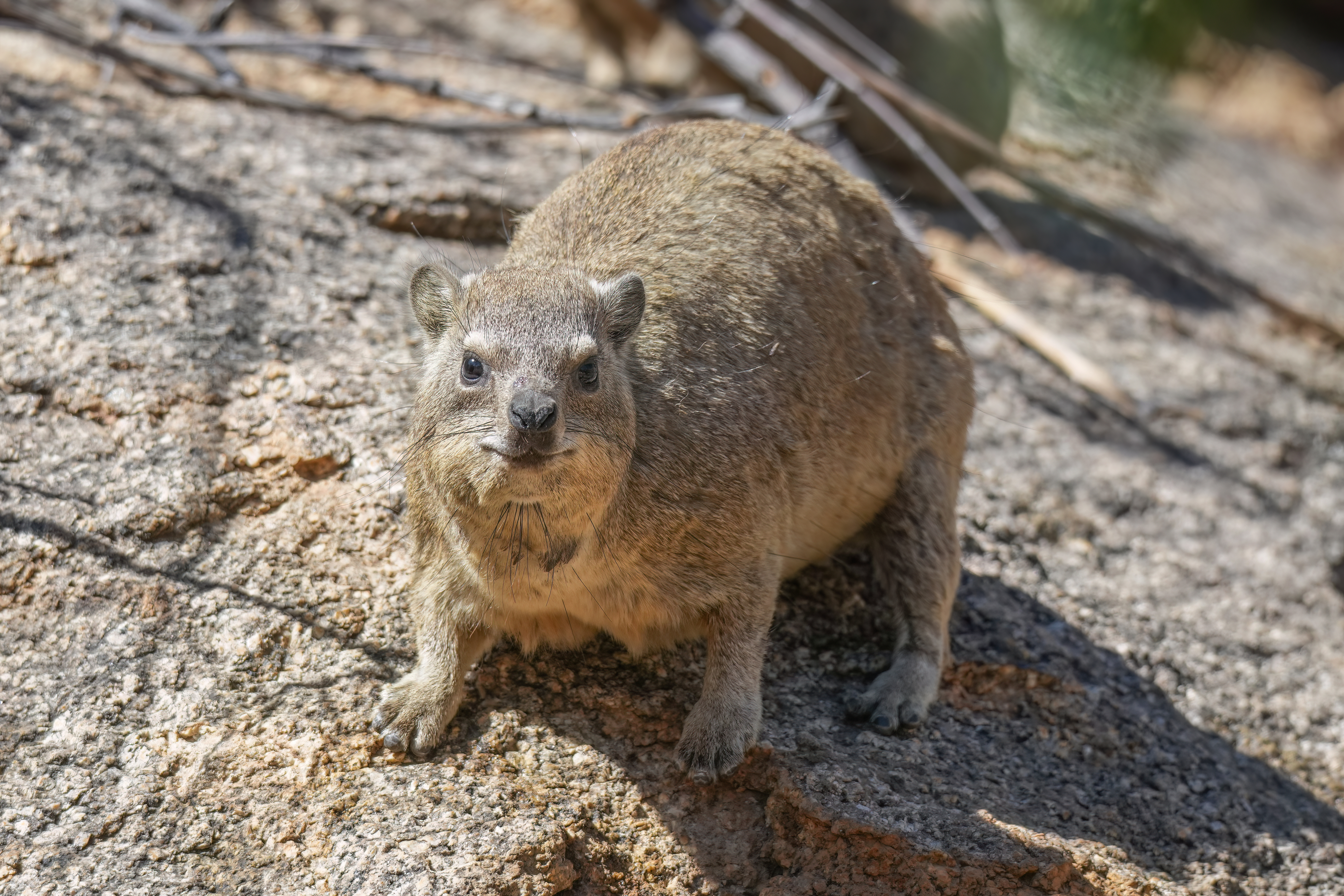
Hyrax
Domain: Eukarya
Kingdom: Animalia
Phylum: Chordata
Class: Mammalia
Order: Hyracoidea
Family: Procavidae
Genus: Procavia
Species: capensis
Rock hyraxes live throughout much of Africa and in Lebanon, Israel, Jordan and the Sinai and Arabian Peninsulas in rocky, scrub-covered areas.
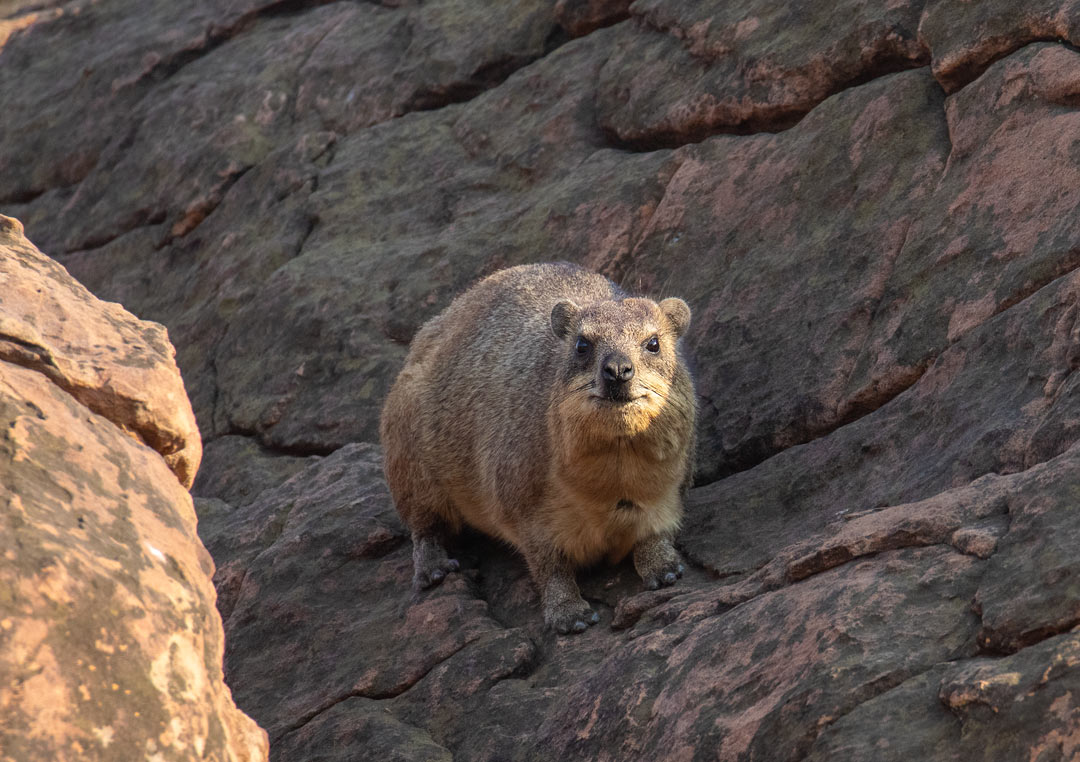
The forefeet of Procavia capensis have four toes and are plantigrade , while the hindfeet have three toes and are semi-digitigrade. All of the toes have rounded nails resembling hooves
The soles of the feet have large, black pads that are moistened by sweat glands, increasing their cohesion to rocky substrates.
A dorsal gland specific to hyraxes that secretes pheromones, which are likely used to mark rocks and help young imprint on their mother.
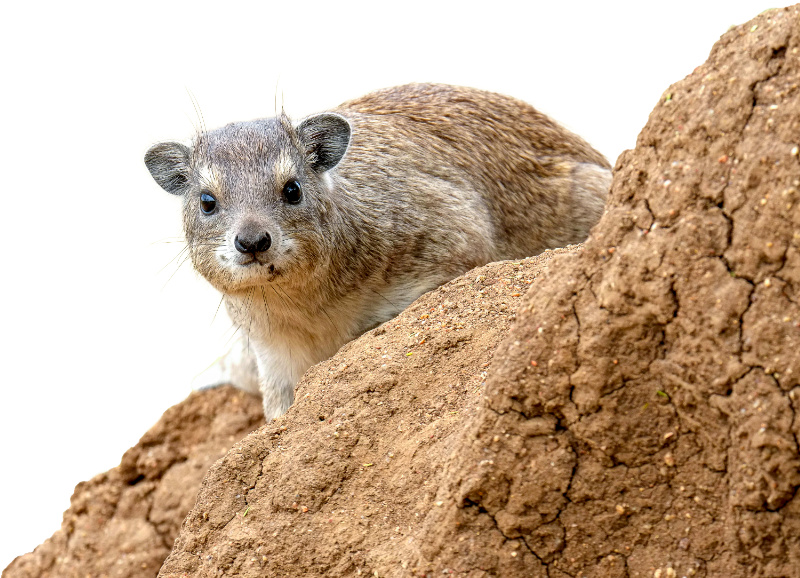
The vocalisations they broadcast during the mating season are a harsh combination of grunts, barks and squeaks are classed as songs due to their complexity, not their beauty.
The degree of rhythmic consistency seems to indicate a male’s attractiveness to females, as the males that kept tempo most precisely went on to father the most offspring.
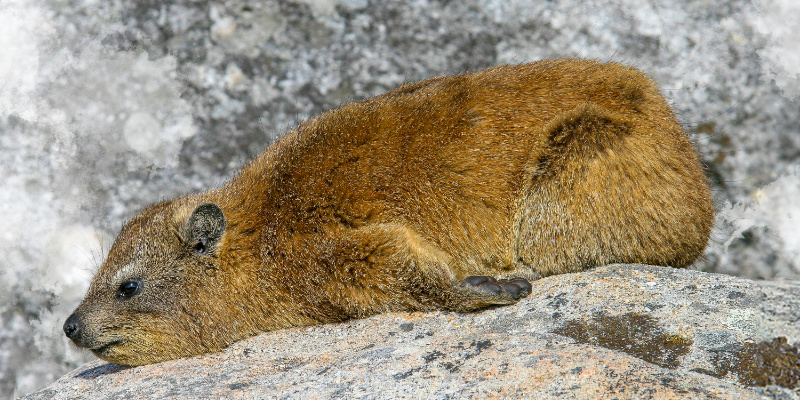
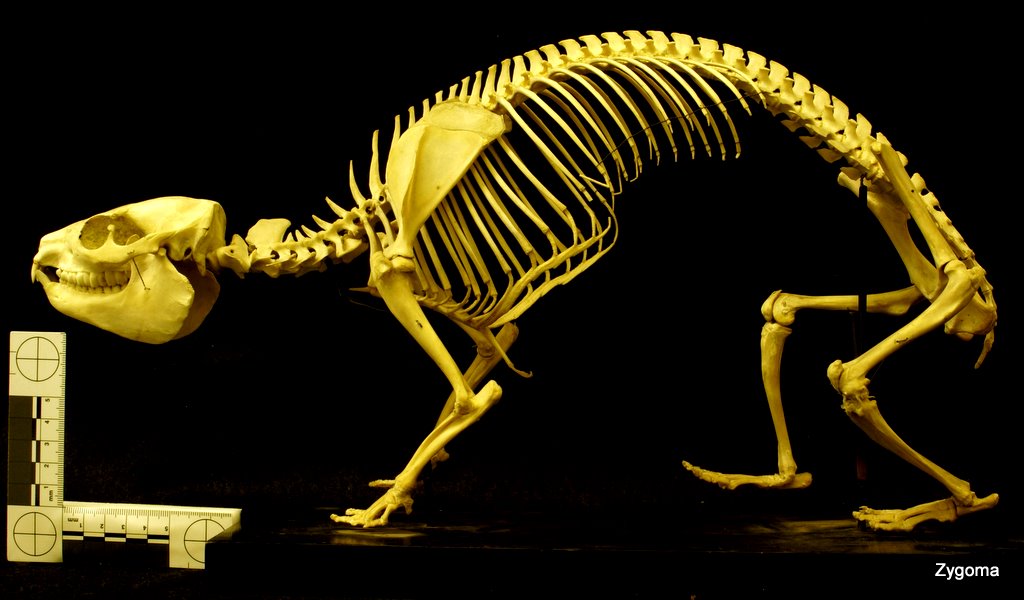
The rock hyrax has similar teeth, toes, and skull structure to that of an elephant and shares an ancestor with the elephant. It has strong molars, which it uses to eat tough vegetation, and two large incisor teeth that grow out to be tiny tusks.
The hyrax’s digestive system is adapted to handle relatively low-quality food. A simple stomach has glandular and nonglandular sections, a tubular small intestine, and a large intestine that is almost as long as the small intestine.
Anatomically, the hyrax lung is a standard mammalian organ with a functional parenchyma, but it is highly sensitive to environmental particulates. The rock hyrax features slit-like nostrils that are highly mobile. Hyraxes can close these slits—an adaptation likely used to prevent the inhalation of dust and debris in their arid, rocky environments
The rock hyrax heart often exhibits a bifid apex. The rock hyrax retains paired (left and right) cranial venae cavae. Hyraxes have poor metabolic heat production and highly variable body temperatures, their circulatory system works overtime to manage heat exchange. The hyrax has adapted blood chemistry for efficient oxygen transport.
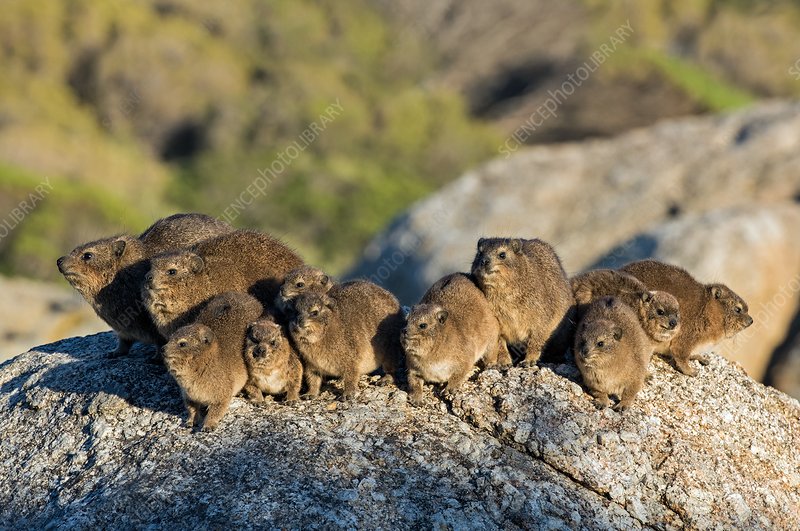
Some hyrax species are primarily terrestrial and active during the day. They live in colonies in "kopjes," or rock outcropping, and cliffs. These colonies can range from five to 60 individuals and may contain more than one species. When bush and rock hyraxes occur together, they live in close contact. In the early mornings they huddle together after spending the night in the same holes. They use the same urinating and defecating places.
Hyraxes maintain their social structure over long periods while adapting to local constraints and generate complex social dynamics. Hyraxes are more selective of their social affiliates at night compared to daytime. Hyraxes maintain their overall network topology while reallocating the weights of social relationships at the daily and monthly scales.
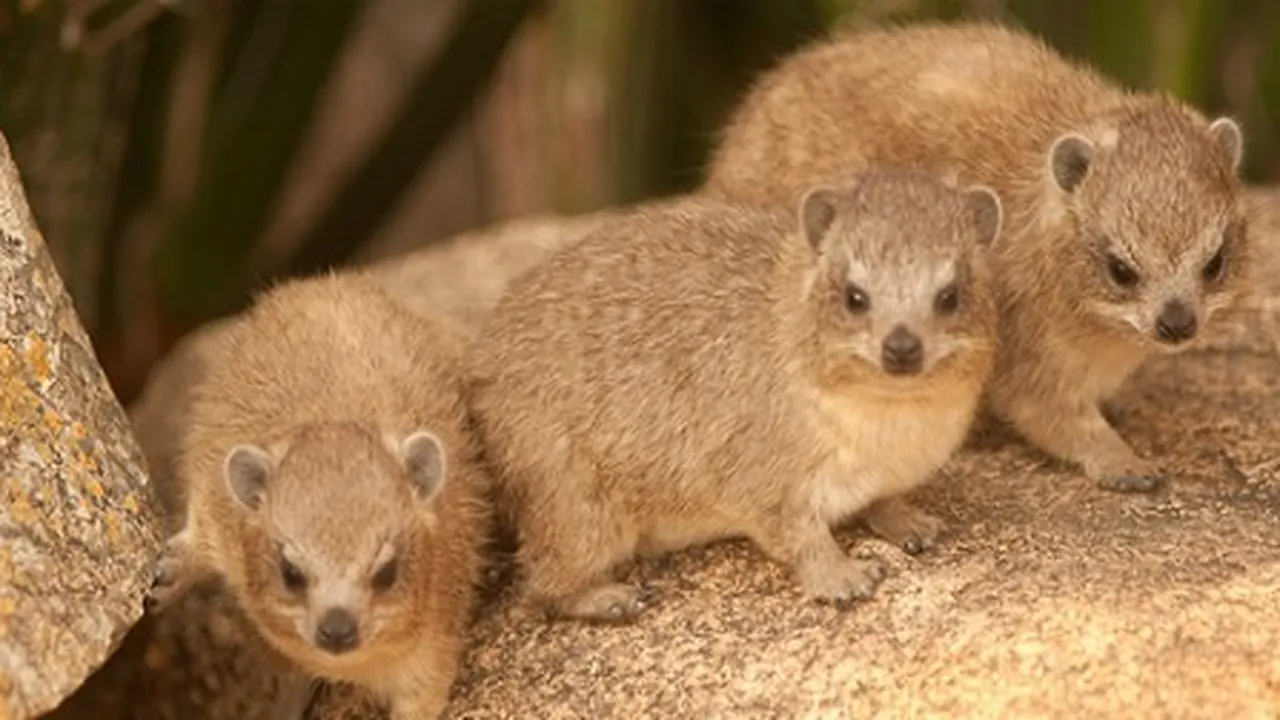
Foraging is the most dominant above-ground behaviour exhibited by rock hyraxes during summer. Most ambient temperatures in the early morning of summer fell within the rock hyrax thermoneutral zone, which enabled the animals to forage without the need for prior heating from a solar energy source.
Basking was an essential behaviour displayed by rock hyrax in winter. The low quality and scarce food source may be inadequate to meet the metabolic requirements of rock hyrax at low ambient temperatures.
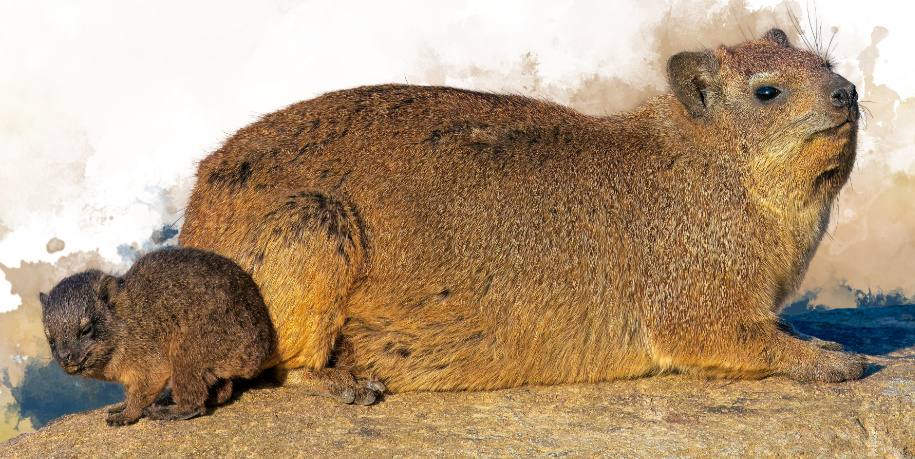
Rock hyraxes are social herbivores that eat a wide variety of plants, including grasses, leaves, fruits, twigs, and bark. They are skilled browsers that can consume plants poisonous to other animals and thrive on low water intake.
Rock hyraxes feed in a circle formation, with their head pointing to the outside of the circle to keep an eye out for predators, such as leopards, hyenas, jackals, servals, pythons, and the Verreaux’s eagle and black eagle, hyrax specialists. If needed, a hyrax can wedge itself backward between rocks and bite savagely at the intruder with its long, sharp incisors.
Schmidt, A. (2026, February 10). Rock Hyrax Fact sheet. PBS. https://www.pbs.org/wnet/nature/blog/rock-hyrax-fact-sheet/
Rock Hyrax | Smithsonian’s National Zoo and Conservation Biology Institute. Rock Hyrax. (2024, September 14). https://nationalzoo.si.edu/animals/rock-hyrax
Animal Diversity Web. (2026, March 29). Procavia capensis. Retrieved from Animal Diversity Web: https://animaldiversity.org/accounts/Procavia_capensis/
BBC Wildlife Magazine. (2022, September 23). Discover Wildlife. Retrieved from How male rock hyraxes woo their potential mates: https://www.discoverwildlife.com/news/how-male-rock-hyraxes-woo-their-potential-mates
EXOTIC WILD ZOO. (2016, August 27). Hyrocoidea (Hyraxes). Retrieved from Veterian Key: https://veteriankey.com/hyrocoidea-hyraxes/
Chattanooga Zoo. (2018, October 24). Rock Hyrax. Retrieved from Chattanooga Zoo: https://www.chattzoo.org/explore/rock-hyrax
Communications biology. (2022, December 15). High-resolution tracking of hyrax social interactions highlights nighttime drivers of animal sociality. Retrieved from Communications biology: https://www.nature.com/articles/s42003-022-04317-5
Zoological Society Of London. (2006, Febuary 28). Seasonal behavioural patterns of free-living rock hyrax. Retrieved from Journal of Zoology: https://zslpublications.onlinelibrary.wiley.com/doi/abs/10.1017/S0952836905006412
Sandiego Zoo. (2019, May 17). Rock Hyrax. Retrieved from Rock Hyrax | San Diego Zoo Animals & Plants: https://animals.sandiegozoo.org/animals/rock-hyrax#:~:text=Hyraxes%20have%20a%20three-chambered,browse%20materials:%20fruits%20and%20leaves.
Oxford Academic. (1971, Feburary 26). Regulation of Body Temperature in the Rock Hyrax. Retrieved from Journal Of Mammalogy: https://academic.oup.com/jmammal/article-abstract/52/1/81/894728